



Boundary Disputes Between Neighbours: What You Should Do
Boundary disputes between neighbours are one of the most common property disputes in England and Wales. They often start with an apparently minor issue: a fence is moved, a hedge is cut back, a wall is repaired, or a neighbour begins building close to the boundary line.
What begins as a practical question about where one property ends and another begins can quickly become stressful, expensive and personal.
Unfortunately the answer is not always as simple as looking at the red line on a title plan. In England and Wales, most registered titles are subject to the general boundaries rule. This means the title plan usually shows the general position of the boundary, rather than the precise legal line on the ground. A fence, wall or hedge may be good evidence of a boundary. However, it is not always conclusive.
For that reason, the early stages of a boundary disagreement are important. The steps taken before correspondence becomes entrenched, works are carried out, or allegations are made can have a significant impact. In particular, these actions affect whether the dispute is resolved sensibly or escalates into formal proceedings.
Why Neighbour Boundary Disputes Escalate
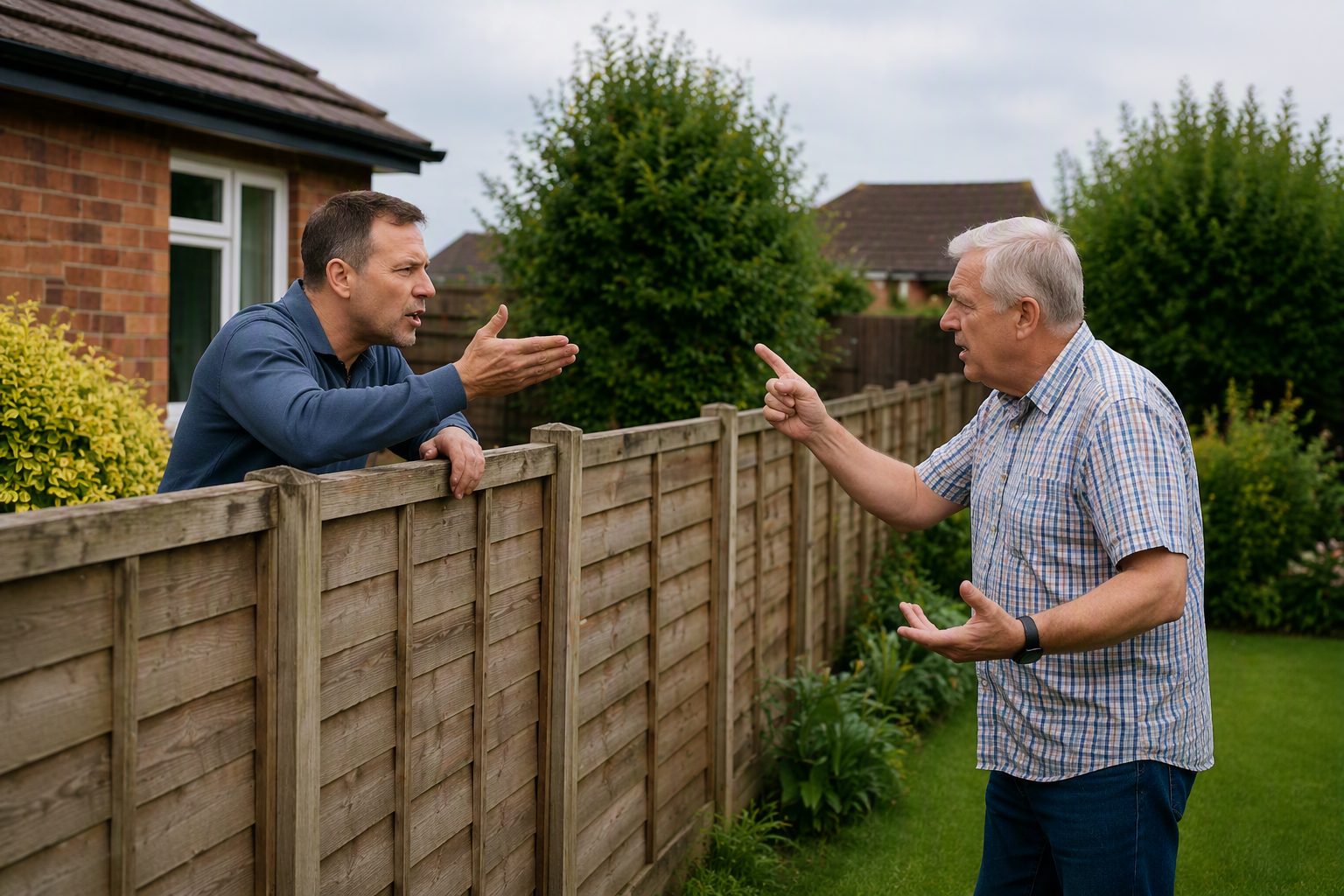
Boundary disputes can escalate because they combine legal uncertainty with strong personal feelings. For homeowners, the land in question may be small in size but important in principle. For rural landowners or developers, even a narrow strip of land can affect access, value, planning, future development or day-to-day use.
Problems often arise where historic deeds are unclear, physical features have changed over time, land has been occupied informally, or successive owners have made assumptions about a fence or hedge without checking the underlying legal position.
Do Not Rely on the Title Plan Alone
A Land Registry title plan is an essential starting point, but it is rarely the end of the matter. The plan may show the extent of registered land by reference to a red edging, but that does not usually identify the exact legal boundary to the nearest centimetre. Where precision matters, the relevant evidence may be found in the original conveyance or transfer. It may also be in historic plans, measurements, physical features, aerial photographs, witness evidence and the way the land has been used over time.
It is also important to distinguish between a physical boundary and a legal boundary. A physical boundary is something visible, such as a fence, wall, hedge, ditch or tree line. A legal boundary is the invisible line dividing ownership. The two may coincide, but they do not always do so. Many boundary disputes arise because neighbours assume that a fence or hedge marks the legal boundary when the title documents suggest otherwise.
Gather Evidence Before Taking Action
Before removing a fence, building up to a disputed line, cutting back a hedge or accusing a neighbour of encroachment, it is sensible to gather the evidence carefully. Useful evidence may include:
- Official copies of the title register and title plan.
- Historic conveyances, transfers and plans, particularly from when the land was first divided.
- Photographs showing the boundary feature over time.
- Planning documents, building control records or old sale particulars.
- Correspondence or agreements between previous owners.
- Evidence of maintenance, repair or occupation of the disputed area.
- Measurements from fixed points on the ground, where appropriate.
The aim is not simply to gather material that supports one side of the argument. It is to understand the strengths, weaknesses and risks before deciding how to proceed.
In neighbour boundary disputes, a careful review of the available evidence often helps identify whether a genuine disagreement exists before positions become entrenched.
When to Instruct a Surveyor in a Boundary Dispute
In many boundary disputes, input from an experienced surveyor can be valuable. A surveyor may be able to review the title material, inspect the site, consider historic mapping and produce a plan or report explaining where the boundary is likely to lie. This can help parties understand the issue and may support negotiation or mediation.
However, surveyor evidence should be approached carefully. If the dispute may become contentious, it is important to consider whether the surveyor is being asked to give informal advice, prepare a report for negotiation, or act as an expert witness. The scope of the instruction should match the purpose of the evidence.
Think About Proportionality
Boundary disputes have a reputation for becoming disproportionate. Legal costs, surveyor’s fees and the strain of the dispute can quickly exceed the value of the land involved. That does not mean the issue is unimportant. However, it does mean strategy matters.
Early advice can help identify whether the issue is one of legal boundary position, adverse possession, trespass, nuisance, right of way, maintenance responsibility or a combination of issues. It can also help decide whether the best route is negotiation, a boundary agreement, mediation, an application for a determined boundary, or formal proceedings.
Clear advice and a sensible approach are crucial to facilitate a desirable outcome for all parties. This allows for a satisfactory resolution. In addition, it avoids prolonged disputes which can affect health, wellbeing and the value and saleability of the properties affected.
Practical Steps in Neighbour Boundary Disputes
- Pause before carrying out works to a disputed fence, wall, hedge or strip of land.
- Obtain and review the title documents and any historic deeds or plans.
- Take dated photographs and keep a careful note of events.
- Avoid inflammatory messages or allegations.
- Consider whether a measured survey or expert input is needed.
- Seek early legal advice before sending formal correspondence or making concessions.
- Keep settlement options open, particularly where the dispute affects neighbour relations or future saleability.
How We Can Help
If you are involved in a boundary dispute, neighbour dispute or other property dispute, Hansells' specialist property litigation team can help. We advise clients across Norfolk and East Anglia on boundary disagreements, trespass claims, adverse possession issues and rights of way disputes. Contact us for practical, proportionate legal advice.
Click here to visit our Commercial Business Dispute Resolution page.
The HM Land Registry also provides guidance on understanding property boundaries and the options available where a boundary is disputed, including boundary agreements and determined boundaries. Click here to visit the GOV Land Registry website.